The Iranian Gambit: A Geopolitical Recalibration and the Architecture of Legacy
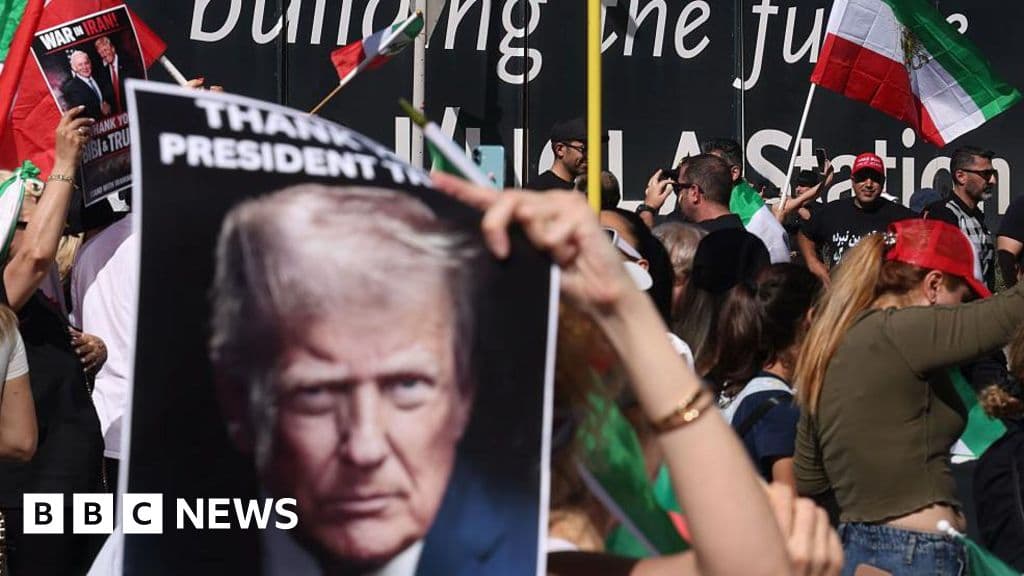
President Trump's audacious strike in Iran marks a pivotal moment, a high-stakes bet on reshaping the Middle East. Explore the geopolitical recalibration and its profound impact on international relations and presidential legacy.
<h2>A New Chapter in Geopolitical Strategy</h2> <p>In a move poised to indelibly stamp a new chapter in global geopolitics, the recent audacious strike targeting Iran's supreme leader by US President Donald Trump represents an enormous bet, one that challenges decades of diplomatic and military engagement in the Middle East. This strategic recalibration seeks to achieve what previous administrations have not: a decisive reshaping of the regional power dynamic through military force, specifically air power, with the ambitious goals of dismantling Iran's nuclear program and instigating regime change in Tehran.</p> <p>The operation, dubbed 'Epic Fury', is a testament to a high-stakes foreign policy approach, signaling a profound departure from traditional diplomatic frameworks. Should it succeed in its stated aims without broader military entanglement, it would undoubtedly be hailed as a generational triumph, profoundly influencing future US strategic doctrine. However, the path ahead is fraught with complexity, raising critical questions about the aftermath and the potential for unintended consequences in a region perpetually on the brink.</p>
<h2>The Weight of History and the Gamble of Power</h2> <h3>Uncharted Territory in US Foreign Policy</h3> <p>The historical tapestry of US involvement in the Middle East is rich with lessons of both engagement and disengagement, success and quagmire. President Trump’s decision to launch a military campaign of such magnitude, without a clearly articulated post-intervention plan, echoes a familiar refrain from past conflicts. His remarks on the potential for ‘American heroes to be lost’ underscore the gravity of the gamble, presented as a necessary price to counter a regime accused of sowing chaos since 1979. This framing, emphasizing resolve against a long-standing adversary, attempts to rally support for an intervention that many view with apprehension.</p> <p>Yet, this pivot comes from a presidency that once pledged to end 'forever wars', a paradox that spotlights the intricate dance between campaign promises and geopolitical realities. The simultaneity of military operations across various fronts, including Iran, Venezuela, and Syria, marks a significant redefinition of US strategic footprint globally, prompting deep intellectual inquiry into the philosophical underpinnings of such broad-spectrum interventionism.</p>
<h3>Domestic Echoes and International Repercussions</h3> <p>The immediate international reaction to the strike suggests a perilous escalation. Analysts, such as Mohammed Hafez of the Naval Postgraduate School, warn of a potential spiral, arguing that the US may now be committed to a full-scale regime change operation, which typically necessitates 'boots on the ground' — a scenario the administration aims to avoid. Iran’s swift retaliatory strikes against regional US allies – Bahrain, UAE, Qatar – confirm a resolve to engage more aggressively, potentially catalyzing a regional conflagration that could destabilize global markets and impact the US economy directly. Such a 'quagmire' would not only jeopardize the administration's other regional priorities, like rebuilding Gaza or strengthening ties with Saudi Arabia, but also significantly complicate the President's domestic political standing.</p> <p>Back home, the intervention has ignited a fierce political debate. While many Republicans have expressed support, viewing it as a decisive response to Iranian aggression, a significant bipartisan faction, particularly Democrats, condemns the lack of prior congressional consultation. Critics highlight a perceived 'free-wheeling approach to foreign policy' and a disinterest in building public and legislative consensus. This domestic political battle, unfolding amidst crucial midterm elections, underscores the profound link between foreign policy adventures and their immediate electoral repercussions, challenging the administration to justify its strategic calculus not just to the international community, but to its own populace.</p>
<h2>The Unfolding Narrative: Legacy in the Balance</h2> <p>As the international community watches Iran's response, the true measure of this audacious gambit remains to be seen. The President's seemingly contradictory statements regarding the duration and scope of the operation – from a swift resolution to ongoing bombardment – reflect a fluid, unconventional approach that confounds both allies and adversaries. This dynamic, unpredictable posture has been lauded by supporters as effective, enabling breakthroughs like the Gaza ceasefire and increased NATO contributions. However, detractors point to the inherent risks of such an ad-hoc strategy in volatile regions.</p> <p>Ultimately, this decisive moment will not only define President Trump's immediate political future but will also profoundly shape his legacy. History often judges leaders not by the boldness of their initial actions, but by the long-term consequences and the stability they leave in their wake. The Iranian gambit, therefore, is more than a military operation; it is a test of strategic foresight, a recalibration of international relations, and a defining chapter in the ongoing architectural evolution of global power structures.</p>
"Architectural silence is often the most profound statement a structure can make. It creates space for the mind to breathe."— The EverGreen Compendium
Comments
No comments yet. Be the first.