The Unraveling of an Era: Deconstructing the Geopolitical Shockwaves from the Iranian Strikes
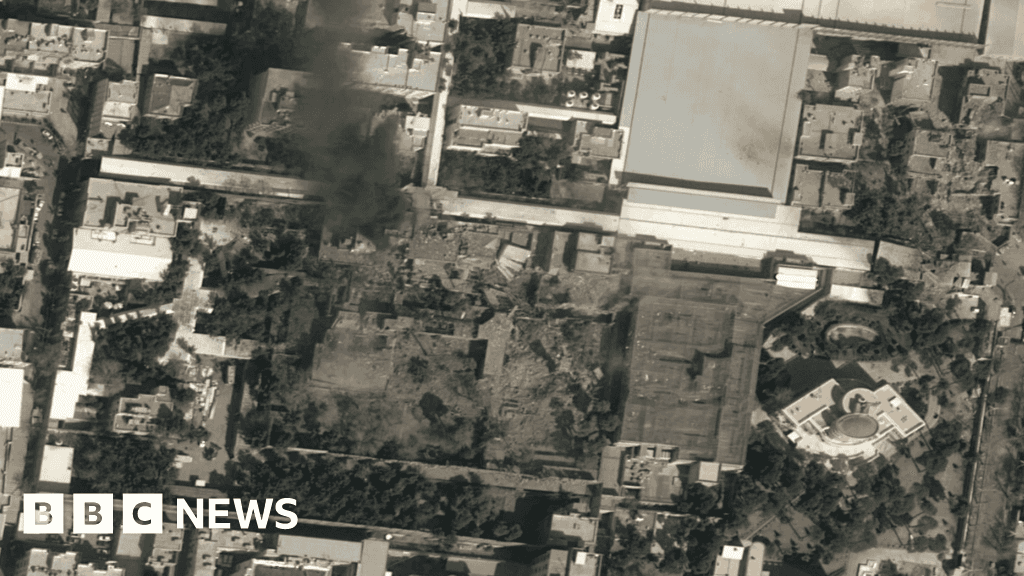
A new geopolitical epoch dawns as US-Israeli strikes target Iran, confirming Supreme Leader Khamenei's death and igniting regional retaliations.
## The Unraveling of an Era: Deconstructing the Geopolitical Shockwaves from the Iranian Strikes
The fabric of Middle Eastern geopolitics has been irrevocably altered following an extraordinary series of events culminating in the confirmed death of Iran's Supreme Leader, Ayatollah Ali Khamenei. What began as a strategic confrontation between global powers and a regional actor has rapidly escalated, triggering seismic shifts that challenge the very architecture of international stability and power dynamics. For EverGreen, an intellectual journal dedicated to understanding the profound structures that shape our world, this moment represents a critical juncture in the 'design' of global security.
### The Dawn of an Unprecedented Escalation
Saturday dawned with reports of targeted assaults across Iran, initiated by a coordinated US-Israeli offensive. This calculated, preemptive strike, described by Israeli Prime Minister Benjamin Netanyahu as a “powerful, surprise strike,” aimed directly at the heart of Iran's leadership and strategic infrastructure. The audacity and precision of the attacks immediately signaled a departure from previous engagement protocols, pushing the region into uncharted and volatile territory.
Key targets included the Tehran compound of Ayatollah Khamenei, which satellite imagery and verified footage later confirmed suffered significant damage. Statements from US President Donald Trump and Prime Minister Netanyahu swiftly followed, asserting Khamenei's demise. This claim was tragically corroborated by Iran’s Supreme National Security Council, confirming the Supreme Leader had been killed within his office – a truly unprecedented blow to the Islamic Republic's established order.
### The Anatomy of a Strategic Offensive
The allied operations were multifaceted and comprehensive. Israeli Defence Minister Israel Katz characterized them as a “preemptive strike to remove threats,” while US President Trump articulated a clear objective: to “destroy their missiles and raze their missile industry to the ground,” ensuring Iran would not obtain a nuclear weapon. The US military's Central Command further detailed the intent to “dismantle the Iranian regime's security apparatus,” prioritizing locations deemed an imminent threat. These included critical facilities of the Islamic Revolution Guard Corps (IRGC), air defense systems, missile and drone launch sites, and military airfields.
Over 200 Israeli fighter jets reportedly participated, dropping hundreds of munitions on approximately 500 targets across western and central Iran. The human toll among the Iranian leadership was significant, with reports of up to 40 Iranian officials killed, including high-profile figures such as Ali Shamkhani, secretary of Iran's Defence Council, and senior IRGC commanders. The scope and scale of these strikes underscored a resolve to fundamentally alter Iran's military capabilities and leadership structure.
### Tehran's Swift Retaliation: A Regional Quake
True to its warnings, Iran did not hesitate to respond. Shortly after the initial wave of strikes, missiles and drones were launched towards Israel and four Gulf Arab nations—Bahrain, Kuwait, Qatar, and the UAE—all hosts to significant US military presences. The IRGC claimed responsibility for hitting multiple sites in Israel and major US military facilities in the region, including Al Udeid airbase in Qatar and the US Fifth Fleet headquarters in Bahrain, even asserting the destruction of a US radar system and severe blows to a combat support vessel.
While CENTCOM confirmed that US forces successfully defended against hundreds of incoming Iranian projectiles, reporting minimal damage to installations and no US casualties, the Iranian retaliation highlighted the perilous interconnectedness of regional security. In a move that sent immediate tremors through global markets, the IRGC also broadcast warnings via radio to vessels, declaring that “no ship is allowed to pass the Strait of Hormuz,” a crucial chokepoint for approximately 20% of global oil and gas shipments.
### The Human Cost and Collateral Ripples
The human toll within Iran was devastating. The Red Crescent reported over 200 fatalities and more than 700 injuries across 24 of Iran’s 31 provinces, with a single explosion at a school in southern Iran claiming over 100 lives. In Israel, an Iranian missile strike in central Tel Aviv resulted in one death and numerous injuries. The UAE also reported a fatality in Abu Dhabi.
The widespread disruption was compounded by a near-total internet blackout across Iran, hampering communication and information flow. Videos circulating on social media depicted scenes of panic, screams, and widespread destruction, underscoring the profound psychological and physical impact on the civilian populace.
### A Redrawing of Geopolitical Lines
The immediate aftermath of these events has profound implications for the geopolitical architecture of the Middle East. President Trump explicitly called for the Iranian people to “take over your government,” urging them to prepare for the overthrow of the clerical establishment and offering immunity to armed forces members who lay down their weapons. This rhetoric, coupled with Netanyahu’s assertion of an “operation to remove the existential threat posed by the terrorist regime in Iran,” signifies a direct challenge to the very legitimacy and continued existence of the current Iranian state.
Iran, through its Foreign Minister Abbas Araghchi, vehemently condemned the attacks as “wholly unprovoked, illegal, and illegitimate,” vowing a “crushing and regret-inducing” response. This stark divergence in narratives sets the stage for a protracted and dangerous period of confrontation, potentially redefining alliances and enmities across the globe.
### The Leadership Vacuum and Constitutional Imperatives
With the sudden death of Ayatollah Khamenei, Iran faces an unprecedented constitutional challenge. The Supreme Leader, appointed by the Assembly of Experts, is the ultimate authority in the country. While the Iranian Constitution mandates the selection of a new leader as swiftly as possible, the current state of conflict and instability poses severe logistical and security hurdles. In the interim, a council comprising the president, the head of the judiciary, and a cleric member of the Guardian Council will assume his responsibilities, navigating the nation through its most severe crisis in decades.
### Global Systems Under Strain: Airspace and Economy
Beyond the immediate conflict zones, the ripple effect on global systems was instantaneous and widespread. Major airlines responded by diverting or canceling hundreds of flights to and from the Middle East, citing safety concerns. Key airspaces, including those of Iraq, Jordan, and the UAE, were partially or fully closed. This disruption, affecting thousands of flights and tens of thousands of passengers, highlights the fragility of our interconnected global infrastructure in the face of regional conflict. The Strait of Hormuz threat, if actualized, would have monumental economic consequences, demonstrating how a localized conflict can rapidly destabilize global commerce.
### Conclusion: A New Architectural Blueprint of Power?
The events of these past days represent more than just a military confrontation; they are a fundamental stress test on the existing global and regional 'architecture' of power. The confirmed death of a Supreme Leader under such circumstances, coupled with direct US-Israeli intervention, signals the potential for a complete re-architecting of the Middle East’s geopolitical landscape. As EverGreen, we watch not just the unfolding news, but the underlying structures of power, governance, and international relations being dismantled and potentially reassembled. The long-term implications for global security, energy markets, and diplomatic frameworks remain profoundly uncertain, marking the dawn of a new, volatile, and deeply consequential era.
"Architectural silence is often the most profound statement a structure can make. It creates space for the mind to breathe."— The EverGreen Compendium
Comments
No comments yet. Be the first.